
How Garage Door Issues Affect Home Safety
Most homeowners think of their garage door as a convenience. It opens when needed, closes when it should, and as long as it responds on command, it rarely gets a second thought. But from a safety standpoint, a garage door is one of the largest moving systems in your home and one of the most overlooked.
When something starts to go wrong, the impact goes beyond performance. It affects how safely the door operates, how securely your home is protected, and how predictable the system is during everyday use. In many cases, the warning signs are there early, but they are easy to dismiss because the door is still functioning.
Across Northeast Ohio, including areas like Aurora and Hudson, we see the same pattern repeat itself. Small issues are ignored because they don’t feel urgent, and over time, those small problems turn into real safety concerns. To better understand how these risks develop, we spoke with Maxim Geht of Ohio Garage Door Repair about what homeowners should be paying closer attention to.
When a Garage Door Becomes Unpredictable
A properly functioning garage door should behave the same way every time you use it. It should open smoothly, close evenly, and respond consistently without hesitation. That predictability is what makes the system feel safe.
When that consistency starts to change, it’s often the first sign that something is no longer working the way it should. The door may begin to jerk slightly as it moves, pause midway through its cycle, or close unevenly along the ground. These changes may seem minor at first, but they introduce uncertainty into a system that is designed to be controlled.
Unpredictability is where safety risks begin to develop. A door that doesn’t move the same way each time can catch someone off guard, especially in situations where timing and positioning matter. Whether it’s a delayed response or a faster-than-expected movement, those inconsistencies create conditions where accidents are more likely to happen.
As Maxim Geht of Ohio Garage Door Repair explained when we spoke, this is often one of the earliest warning signs homeowners overlook.
“When a door stops behaving the way you expect, that’s when it becomes a safety issue,” he said. “Not because it’s completely broken, but because you can’t rely on what it’s going to do next.”
Worn Springs and the Risk of Sudden Failure
Garage door springs are one of the most critical components in the entire system. They are responsible for carrying the majority of the door’s weight, which means they are constantly under high tension during operation. Over time, that tension wears on the material, gradually reducing its strength.
What makes spring issues particularly dangerous is how little warning they often provide. The door may continue to function even as the springs weaken, giving homeowners the impression that everything is fine. In reality, the system is operating under increasing strain.
If a spring fails completely, the change is immediate. The door can drop suddenly, become extremely difficult to lift, or stop functioning altogether. In those moments, the weight of the door is no longer properly supported, creating both a mechanical and a safety risk.
In homes throughout Aurora and Hudson, this is one of the most common issues we see, especially in systems that have been in use for several years without inspection or adjustment. As he pointed out, the amount of force involved is often underestimated.
“People don’t realize how much tension those springs are holding,” he explained. “When they fail, it’s not a slow decline. It happens all at once.”
Faulty Sensors and False Security
Modern garage door systems include safety sensors that are designed to prevent the door from closing if something is in its path. These sensors play an important role in protecting people, pets, and objects from harm during operation.
However, when sensors become misaligned, dirty, or partially obstructed, they can create a false sense of security. In some cases, the door may refuse to close, leaving the home exposed. In others, the system may fail to detect an obstruction altogether, allowing the door to close when it shouldn’t.
This is what makes sensor issues particularly concerning. The feature is still present, but it may not be functioning as intended. Homeowners often assume that because their system includes sensors, it is automatically safe. In reality, those sensors require proper alignment and maintenance to do their job.
The 30-Second Safety Test Every Homeowner Should Try
One of the simplest ways to verify that your garage door’s safety features are actually working is to test them directly.
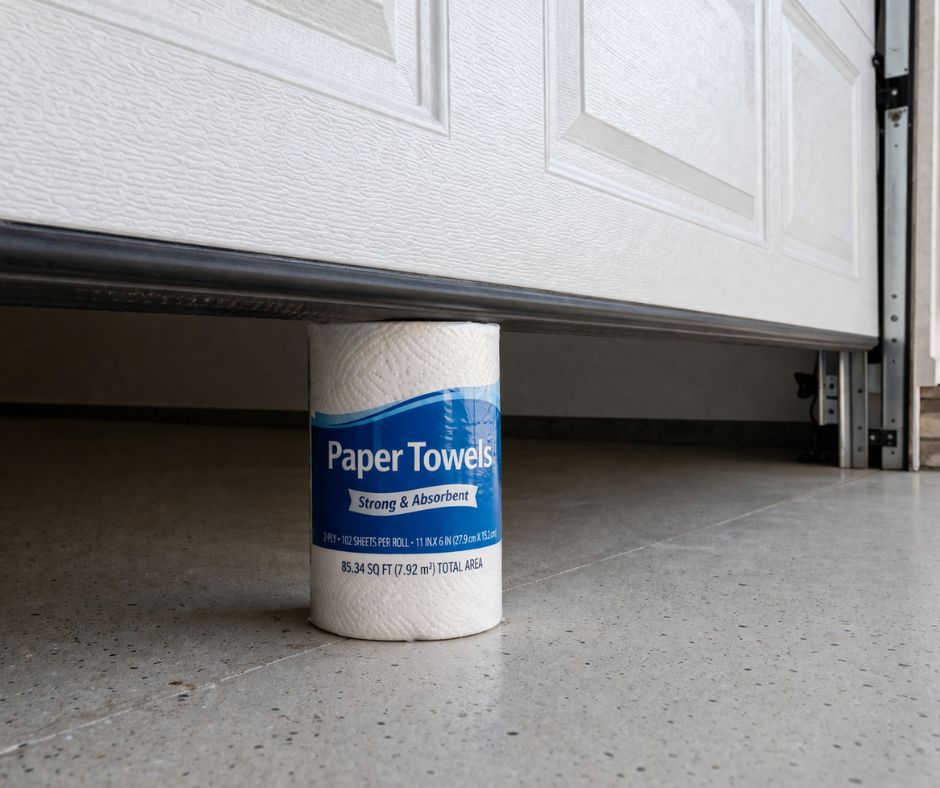
He recommends what he calls a quick “auto-reverse test.” Place a roll of paper towels or a small cardboard box in the path of the door, then close it using the opener. The moment the door makes contact, it should immediately reverse direction.
If it doesn’t reverse right away—or worse, continues pressing down—the system is not calibrated correctly.
“This is one of the most important safety features on the door,” he explained. “If it’s out of adjustment, the door won’t respond the way it should in a real situation.”
It’s a simple test that takes less than a minute, but it confirms whether the system will react properly when it matters most.
Gaps, Misalignment, and Security Weak Points
A garage door that doesn’t sit properly when closed can introduce more than just cosmetic concerns. Even a small gap along the bottom or sides of the door can affect both safety and security in ways that aren’t immediately obvious.
As materials shift with seasonal changes, alignment can gradually move out of place. Over time, this can create uneven contact with the ground or small openings along the edges. While these gaps may seem minor, they can allow moisture, debris, and pests to enter.
More importantly, they can create a leverage point.
A gap of even half an inch can provide enough space for a pry bar, turning what should be a secure barrier into a vulnerability. In homes across Aurora and Hudson, ensuring that the door seals flush to the ground is one of the simplest and most effective ways to maintain garage security.
He emphasized that homeowners should pay attention to how the door sits, not just whether it closes.
“If it doesn’t seal the way it used to, that’s something to take seriously,” he said. “It’s not just about insulation—it affects how secure the space really is.”
The Opener Working Harder Than It Should
When a garage door system is properly balanced, the opener is responsible for guiding movement, not carrying the full weight of the door. When that balance is lost, the opener begins to compensate.
This added strain often shows up as hesitation, slower operation, or inconsistent performance. While it may seem like the opener itself is failing, it is usually responding to resistance elsewhere in the system. Worn springs, increased friction, or misalignment can all contribute to this added workload.
Over time, the opener’s performance declines as it continues to operate under conditions it was not designed for. This can lead to unexpected stops, incomplete cycles, or situations where the door becomes difficult to control.
One thing Maxim Geht of Ohio Garage Door Repair pointed out during our discussion is that opener issues are often misunderstood.
“The opener is usually reacting to something else,” he said. “If the system isn’t balanced, it ends up doing more work than it should.”
Why Small Issues Turn Into Safety Risks
Garage door systems rarely fail all at once. Instead, they change gradually, with each small issue adding stress to the system as a whole. Because the door continues to function, those changes are often ignored.
In homes across Aurora, Hudson, and the broader Northeast Ohio region, it’s common for minor issues to go unaddressed until they begin to interfere with daily use. By that point, the system is already under strain, and multiple components may be affected.
A garage door doesn’t have to completely fail to become dangerous, it just has to stop behaving predictably. Once that happens, the margin for error gets smaller with every use.
Staying Ahead of the Problem
Maintaining safety doesn’t require constant inspection, but it does require awareness. Paying attention to changes in how the door moves, sounds, and responds can provide early insight into potential issues.
If something feels different, there is usually a reason behind it. Addressing those changes early is often straightforward and helps prevent more significant problems from developing later.
Garage doors are designed to operate reliably, but they depend on properly functioning components to maintain that reliability. When one part begins to fail, the rest of the system is affected.
The Role Your Garage Door Plays in Overall Home Safety
It’s easy to think of your garage door as separate from your home’s safety systems, but in reality, it plays a much larger role. It protects one of the largest openings in your home, operates under significant weight and tension, and is used daily without much thought.
When everything is working properly, it feels effortless. When something begins to change, the risks become more apparent.
Understanding how garage door issues affect safety allows homeowners to take action before those risks become real problems. Because in the end, a garage door doesn’t need to fail to create a safety concern completely—it only needs to stop working the way you expect it to.